How to Check If a Car Tyre Has a Problem - Kahawatungu
This story has significance for readers across Kenya and beyond.
Knowing how to check if a car tyre has a problem can help you identify issues before they lead to a puncture, poor handling, or a dangerous situation on the road. Regularly inspecting your tyres can reveal problems such as low pressure, uneven wear, cracks, bulges, punctures, or damaged tread. A basic inspection can be done at home, but serious damage should be checked by a qualified tyre professional.
-
Check the Tyre Pressure
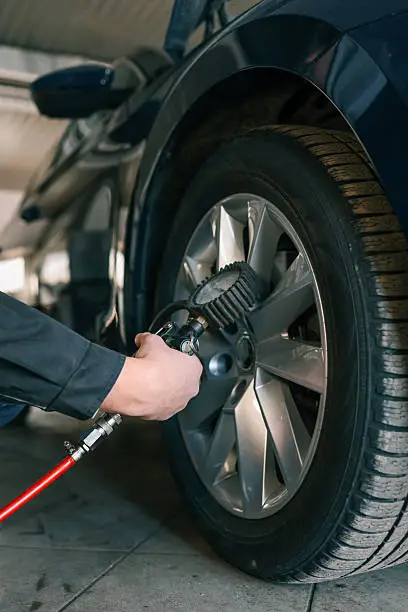
Use a tyre-pressure gauge to check the pressure when the tyres are cold.
Compare the reading with the recommended pressure listed in your vehicle’s handbook or on the tyre-pressure information label, usually found on the driver’s door frame.
- Check all four tyres
- Include the spare tyre where applicable
- Inflate tyres to the recommended pressure
- Do not rely only on how the tyre looks
-
Inspect the Tread
Look closely at the tread across the entire tyre.
Uneven wear, very shallow tread, or areas that appear significantly more worn than others can indicate that the tyre needs attention.
- Check the centre of the tread
- Inspect both edges
- Look for uneven wear
- Check the tread-wear indicators
-
Look for Cracks and Cuts
Inspect the tyre’s sidewall and tread for visible cuts, cracks, or splits.
Small surface marks may not always mean the tyre is unsafe, but deep cuts or significant cracking should be assessed by a professional.
- Check both sidewalls
- Look for deep cuts
- Check for cracking
- Do not ignore damaged rubber
-
Look for Bulges or Blisters
A bulge or blister on the sidewall can indicate damage to the tyre’s internal structure.
This type of damage can increase the risk of tyre failure, particularly at higher speeds.
- Inspect the entire sidewall
- Look for unusual bumps
- Do not drive on a tyre with a significant bulge
- Have it inspected or replaced promptly
-
Check for Nails or Other Objects
Look carefully for nails, screws, glass, or other objects embedded in the tread.
Do not immediately remove an object that has punctured the tyre because doing so can cause a slow leak to become much worse.
- Inspect the tread carefully
- Look for foreign objects
- Check for signs of air loss
- Have punctures assessed professionally
-
Check for Uneven Wear
Run your hand carefully over the tread when the vehicle is stationary and the tyre is cool.
If one part feels significantly smoother, more worn, or uneven compared with the rest, there may be an alignment, balancing, suspension, or inflation problem.
- Look for one-sided wear
- Check for worn patches
- Watch for cupping or scalloping
- Have persistent uneven wear investigated
-
Check the Tyre Age
Tyres can deteriorate with age even when they still have reasonable tread.
Look for the tyre’s date code on the sidewall. The final four digits generally indicate the week and year of manufacture.
- Find the tyre identification markings
- Check the four-digit date code
- Consider the tyre’s age and condition
- Replace ageing or deteriorated tyres when necessary
-
Pay Attention While Driving
Some tyre problems become noticeable when the car is moving.
Vibrations through the steering wheel, pulling to one side, unusual road noise, or changes in handling can indicate a tyre, wheel, alignment, or suspension problem.
- Notice unusual vibrations
- Watch for steering changes
- Listen for unusual tyre noise
- Stop driving if the vehicle becomes unsafe to control
-
Know When to Replace the Tyre
A tyre should be professionally assessed if it has serious damage, exposed internal material, a significant bulge, severe cracking, or insufficient tread.
If you are unsure about the condition of a tyre, have it inspected before continuing to drive.
Also Read: How to Check If an Infant Is Hungry
Reporting originally appeared via Kahawa Tungu. Read the full source for additional context.