Political Storm Brews in Emurua Dikirr Ahead of Gachagua's Contentious Visit
Youths warn against entry as MP opposes, while Deputy President alleges state-backed disruption plans.
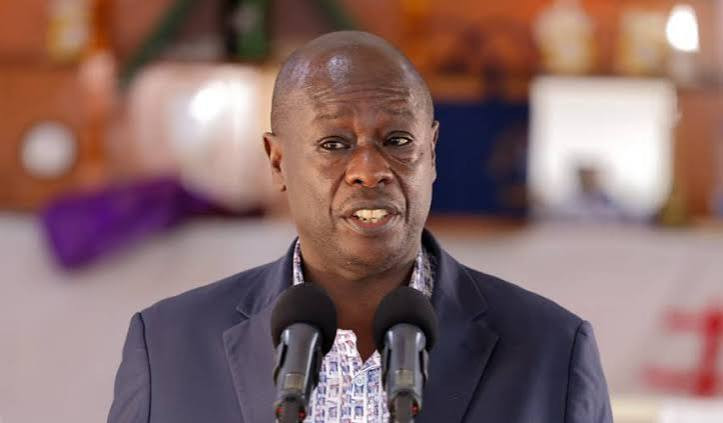
A contentious political climate has engulfed Emurua Dikirr Constituency in Kenya's South Rift, ahead of a planned visit by Former Deputy President Rigathi Gachagua on Friday, August 21. The impending tour has triggered widespread apprehension, with local groups and leaders voicing strong opposition, fueling fears of potential confrontations.
A video circulating online shows a group of youths, some armed with clubs, explicitly warning Gachagua against entering the constituency. Two individuals in the video, identifying themselves as Chemokwo and Cheptalamwa Kapon, stated they were acting under instructions from an unnamed “boss” and vowed to prevent the Former Deputy President from setting foot in Emurua Dikirr.
Adding to the dissent, the area's Member of Parliament, David Kipsang Keter, has publicly criticized Gachagua's political mobilization efforts within his constituency. Keter, who secured the Emurua Dikirr parliamentary seat in a May 2026 by-election and is consolidating his political base, declared to his supporters, “We will not allow outsiders to come and test political gadgets in our backyard,” asserting that residents had already settled on their political affiliations.
However, Benard Ngeno, widely known as Buluu and a former aide to the late Johana Ng’eno, attempted to allay fears of unrest, emphasizing the constituency’s peaceful nature. While noting several community activities planned for August 21, including an empowerment program for boda boda riders, Ngeno suggested Gachagua might have chosen a different date to ensure a larger turnout for his meeting.
Despite the brewing opposition, Gachagua remains resolute in his decision to visit Emurua Dikirr. He formally notified Inspector General of Police Douglas Kanja of his intentions via a letter, requesting assurances of protection for his entourage, supporters, and local residents. Gachagua stated his visit was at the invitation of DCP candidate Vincent Rotich for a thanksgiving event.
In his communication to the IG, Gachagua expressed serious concerns over alleged threats against his visit, some of which he claimed were recorded on video and disseminated across social and mainstream media. He further leveled grave accusations against Interior Cabinet Secretary Kipchumba Murkomen, Interior Principal Secretary Raymond Omollo, and MP Keter, alleging they were planning to mobilize “goons and plain-clothes police officers” to disrupt his event. Gachagua explicitly linked these alleged plans to recent violence in Homa Bay, warning that the Emurua Dikirr situation could escalate to “mayhem of a higher magnitude” than witnessed there. These specific allegations have not been independently verified.
The Former Deputy President challenged IG Kanja to guarantee safety and demonstrate adequate security preparations. He also criticized the police leadership for allegedly failing to act on previous evidence of attacks against him. Gachagua went on to issue a stark warning to Kanja, invoking the International Criminal Court and Kenya’s experience during the 2007–08 post-election violence, cautioning against potential international criminal accountability should the police fail in their duty to protect citizens.
This escalating political standoff underscores the increasingly competitive political landscape in Kenya’s South Rift region. Emurua Dikirr is traditionally considered a stronghold of the ruling United Democratic Alliance (UDA). Gachagua’s determined efforts to expand his political influence in the Rift Valley and challenge President William Ruto’s regional dominance are evident, as he consistently positions himself as a champion for farmers and the agrarian economy, advocating a narrative of marginalization. This regional power struggle holds significant implications for the broader national political realignment and the stability of the ruling coalition, resonating deeply with political observers across Kenya and East Africa. (Source: Standard Media)