'Masha and the Bear': Ukraine sanctions Russian cartoon
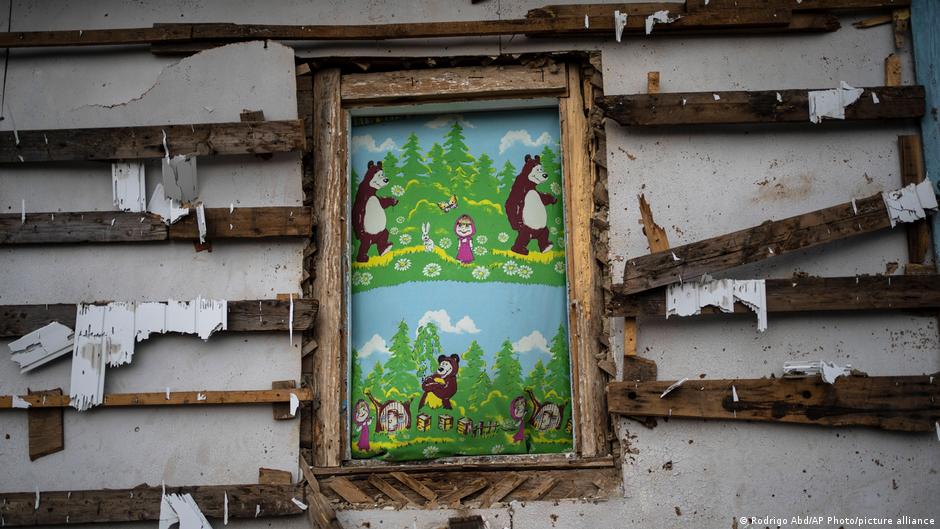
Ukrainian Culture Minister Tetyana Berezhna on Friday said Kyiv had imposed sanctions on the "producers and distributors" of the Russian children's cartoon series "Masha and the Bear," or "Masha i Medved" in the original language.
The step will enable Kyiv to seek to remove and demonentize the series on websites like YouTube or streaming services like Netflix in the country.
The cartoon about a mischievous young girl's unlikely friendship and adventures with a retired circus bear, loosely based on a Russian oral fairytale of the same name, launched in 2009 and quickly became one of Russia's most successful televisual exports.
What did the government in Kyiv say about the sanctions?
"Ukraine has imposed sanctions against the producers and distributors of the Russian animated series Masha and the Bear," Berezhna said on social media. "This creates legal grounds to block the content in Ukraine and engage international platforms to restrict its monetization and distribution."
The show has also faced criticism from allies of Ukraine like Estonia and the UK for allegedly painting Russia in a positive light or for military or Soviet symbols sometimes appearing in the show.
"Russian propaganda has no place on children's screens — in Ukraine or anywhere in the world," Berezhna said.
In further comments on Facebook, Berezhna said the Ukrainian language channel for the show had 800 million views in 2025 alone. The Ukrainian language channel currently has roughly 18 million subscribers.
Worldwide, as of June 2026, the show had more than 54 billion combined views on YouTube, making it one of the 50 most popular feeds on the entire site.
Ukrainian President Volodymyr Zelenskyy signed a decree imposing sanctions on the creators of the show for spreading "pro-Russia narratives" and for posing a threat to Ukrainian national security. They target the studio, the show's founder, and the series' scriptwriter and director.
Ukraine said it would seek to have its sanctions mirrored by international partners, potentially widening the restrictions.
How did the show's makers and the Russian government respond?
The company behind the show, Animaccord Animation Studios, has called past allegations that the show contains Russian propaganda "false and defamatory," saying that it operates independently and receives no funding from the government in Moscow.
Kremlin spokesman Dmitry Peskov was asked about the sanctions on Friday and said that the cartoon series had "conquered the world" by promoting "the finest human qualities."
"The fact that Ukraine has launched a war against cartoons, too, likely serves as yet another illustration of the ugly nature" of the authorities in Kyiv, he said.
Is 'Masha and the Bear' controversial, and why?
The show has been on the radar of Ukrainian authorities for almost a decade. The first complaint by the State Film Agency dates back to 2017, amid the illegal annexation of Crimea and the lower-level war in Ukraine waged by separatists supported by Russia. Since the 2022 full-scale invasion the issue has come into sharper focus still.
In June, Kyiv protested against streaming giant Netflix's move to acquire the rights to stream new seasons of "Masha and the Bear."
A group of more than 50 British parliamentarians this year appealed to Culture Minister Lisa Nandy to urge streaming platforms to remove the cartoon. They argued that some episodes exposed children to Russian and Soviet military imagery.
Several Estonian politicians have also argued that "Masha and the Bear" is an instrument of Russian soft power, not least because of the several amiable bears in its cast.
Some Western analysts have warned against exaggerating these fears, though — for instance UK academic Mark Galeotti, who wrote an article objecting to the British lawmakers' appeal in July, saying the show was not "the most elevated of television," but "it is cute and it has a big heart."
In its earlier days, "Masha i Medved" was also a topic of some controversy in Russia. It sometimes drew critical comparisons to Western children's shows and prompted debate on whether it was contradicting traditional values about the roles of girls and fathers in Russian society, given Masha's mischievous nature and her paternal bear's gentle use of positive reinforcement rather than correctional discipline.
If you rely on our team for trusted reporting, please take a moment to select us as your Preferred Source on Google, so you'll always see our verified news first.
Edited by: Sean Sinico
Reporting originally appeared via DW News. Read the full source for additional context.