Samsung is still updating the Galaxy S8 and Note 8, nearly a decade after launch - tech-ish
This story has significance for readers across Kenya and beyond.
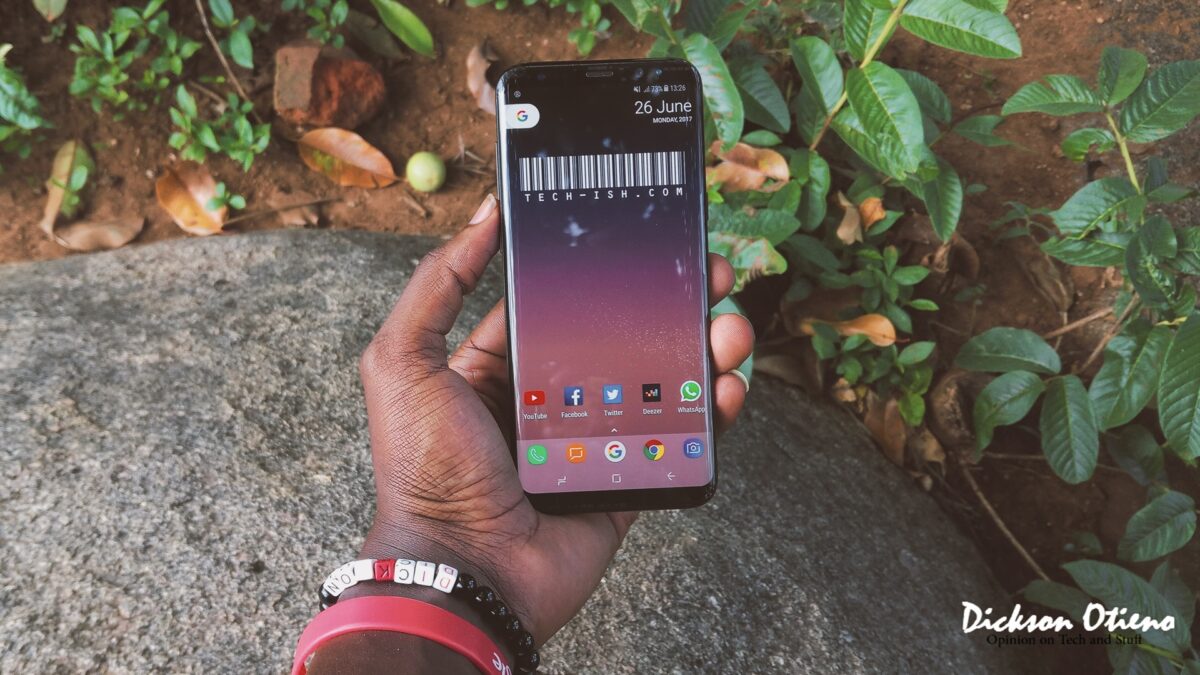
Samsung has pushed a new software update to the Galaxy S8, Galaxy S8+ and Galaxy Note 8. All three phones came out in 2017. All three stopped receiving official software support around 2021.
Samsung’s own firmware documentation lists build G950FXXUCDZE7 for the Galaxy S8 and G955FXXUCDZE9 for the Galaxy S8+, both dated 13 August 2026. The Galaxy Note 8 build, N950FXXUGDZEA, is dated 30 July 2026.
The changelog Samsung published for all three is a single sentence: “Device behavior has been improved.”
What the update actually does, and does not, contain
It does not upgrade Android. The S8, S8+ and Note 8 all remain on Android 9 Pie, the version they were last upgraded to in early 2019.
It does not bring a new security patch either. Samsung’s documentation shows the Galaxy S8 and S8+ still sitting on the April 2021 patch level, and the Note 8 on August 2021. Those are the same patch levels the phones carried before this update. The download is reported to be 420.37MB, which is large for a release whose changelog is just one sentence.
Make tech-ish your favourite source
Star us on Google — you'll see more tech-ish in Top Stories and AI results.
Why this is unusual
Samsung sold the S8 and S8+ from April 2017 and the Note 8 from September 2017. Both lines got two Android upgrades, from Nougat to Oreo to Pie, then quarterly and eventually twice-yearly security patches until 2021. After that came two small releases. All three phones got one in August 2022 that fixed GPS behaviour. The S8+ got a second in September 2022 listed as security improvements. Then nothing for almost four years.
Neither phone appears on Samsung’s current list of devices receiving security updates. The oldest Galaxy S phones on that list are the S21 and S22 generations.
There is a precedent for this kind of thing however. In August 2022 Samsung sent GPS fixes to a batch of retired phones including the Galaxy Alpha, S5 Neo, S6, S7, S8, Note 8 and Note 9. SamMobile estimated the rollout reached more than 500 million devices. Samsung gave no explanation then either.
So the company does occasionally reach back into dead product lines when something in the background stops working. What that something is this time has not been made public.
What this means if you still use one
If your phone gets the update, install it. There’s no evidence it breaks anything.
Samsung’s own position on support has changed a great deal since 2017. Galaxy phones from 2023 get four Android upgrades and stop at One UI 9, as we set out in our list of devices reaching their final major update. From the Galaxy S24 onwards, Samsung promises seven years of both Android upgrades and security patches.
We covered the Note 8’s Kenyan pre-order in September 2017, when Samsung put the recommended retail price at KES 104,999 and took 200 orders in the first fortnight through Samsung Experience Stores, Safaricom shops and a handful of other retailers. We also spent time with the S8+ that year and rated its battery as the reason to pick it over the smaller S8. Phones at that price do not get thrown away. They get sold on, handed down, and used as second phones.
Reporting originally appeared via Tech-ish Kenya. Read the full source for additional context.