China’s humanoid robot revolution gains momentum as industry moves towards mass adoption
This story has significance for readers across Kenya and beyond.
China’s humanoid robot industry is rapidly accelerating into a new phase of large-scale commercialization, as advances in artificial intelligence, manufacturing capabilities, and real-world applications are propelling the sector from technological experimentation towards broader industrial deployment.
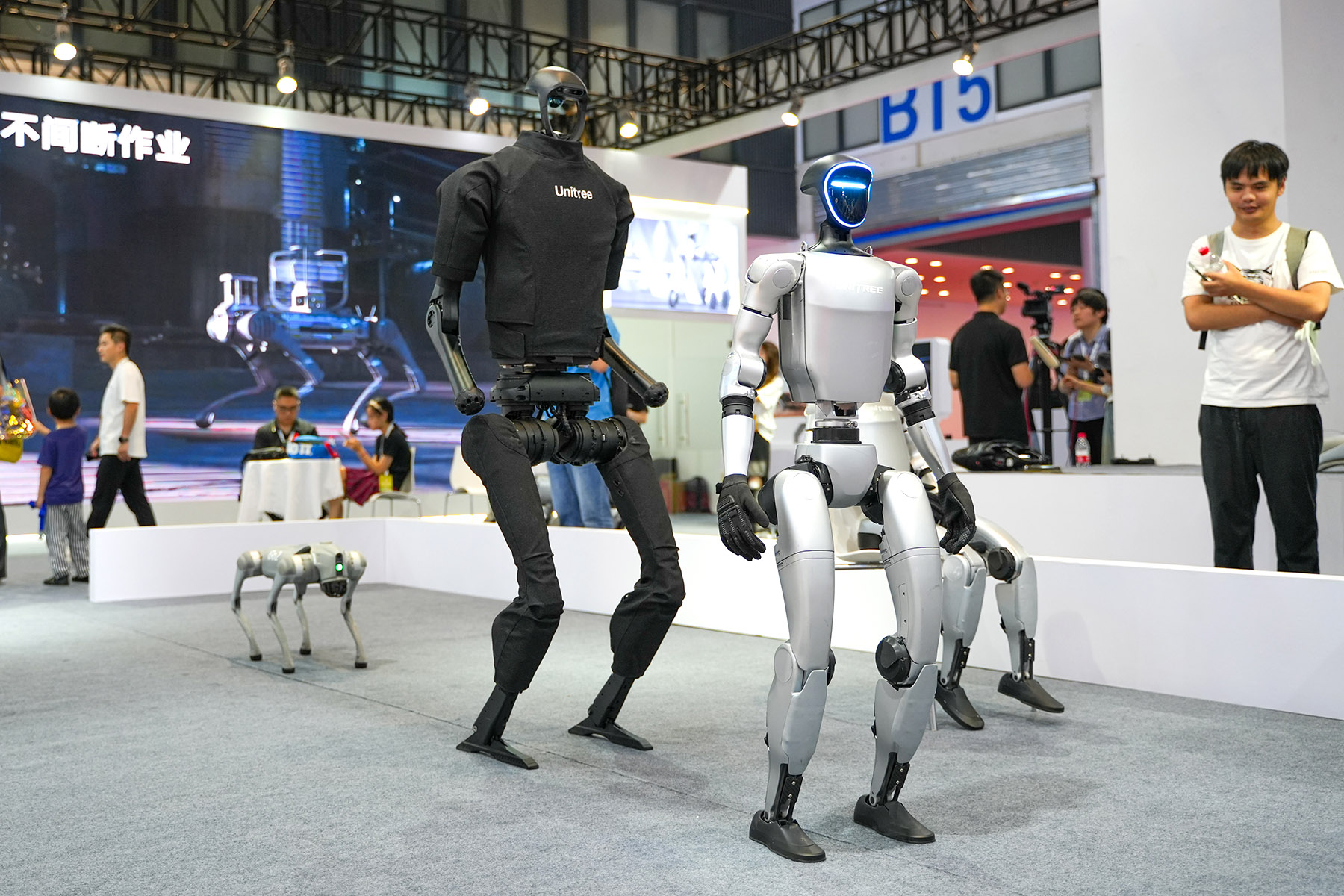
This milestone was highlighted this week as Unitree Robotics became the first humanoid robot manufacturer to list on China’s A-share market, marking a significant step for the country’s emerging embodied artificial intelligence (AI) industry.
Unitree’s shares surged over 600 per cent at the opening of its debut on the Shanghai Stock Exchange’s STAR Market, reflecting robust investor interest in the future potential of humanoid robots and intelligent machines.
Founded in 2016, the Hangzhou-based company has grown into one of China’s leading robotics firms. It develops humanoid and quadruped robots using independently developed core components, including motors, controllers, reducers, and LiDAR systems.
According to its prospectus, Unitree shipped over 5,500 humanoid robots in 2025, capturing 32.4 per cent of the global market share, while its cumulative quadruped robot shipments exceeded 33,000 units, giving it nearly 60 per cent of the global market.
The company reported revenue of approximately 1.15 billion yuan in the first half of 2026, driven by growing demand in areas such as scientific research, education, industrial inspection, security, and emergency response.
Industry experts believe the listing signifies a major shift in the robotics sector.
“Humanoid robotics and embodied AI are moving beyond technology development, competition-based validation, and product iteration towards industrialisation, scalability, and broader recognition from the capital market,” stated Zhou Changjiu, president of the RoboCup Asia-Pacific Confederation.
Unitree founder Wang Xingxing said the company would leverage capital-market support to strengthen research and development, enhance products, and contribute to wider social applications.
Ahead of its listing, Unitree unveiled its latest humanoid robot, “Superman,” developed in just over three months. The robot can perform a two-metre standing high jump and reach a top sprinting speed of 12.66 metres per second, demonstrating rapid progress in robot mobility and performance.
The company’s market debut coincided with the opening of the 2026 World Robot Conference (WRC) in Beijing. The event showcased developments across the robotics value chain, featuring over 300 exhibitors and more than 2,000 exhibits.
Under the theme “Human-Robot Symbiosis, Production-Demand Convergence,” the conference demonstrated how robots are transitioning from exhibition displays into practical fields, including manufacturing, logistics, healthcare, energy, and public services.
Xu Xiaolan, chairwoman of the Chinese Institute of Electronics, noted that China’s humanoid robot industry is entering a critical stage as embodied intelligence products move from small-scale trials towards wider adoption.
Further reflecting this momentum are the preparations for the second World Humanoid Robot Games, scheduled in Beijing from 22 to 26 August. Organisers said participation has expanded dramatically, with 666 teams and 2,056 robots from 16 countries expected to compete, a significant increase from over 500 robots at the inaugural event in 2025.
The competition will feature over 30 events, including long jump, weightlifting, tug of war, and table tennis. Scenario-based challenges will also test robots in practical environments such as factories, hotels, homes, and logistics facilities.
Organisers anticipate that many competition rules could eventually evolve into technical standards supporting wider industrial applications.
According to industry experts, China’s growing strength in robotics is bolstered by its extensive manufacturing ecosystem, robust supply chains, and large domestic market, which enable companies to rapidly transform prototypes into commercial products.
While countries such as the United States and Europe maintain advantages in areas like foundational algorithms, and Japan and South Korea possess expertise in precision components, China’s combination of manufacturing scale and diverse application scenarios has emerged as a key competitive advantage.
Chinese companies accounted for nearly 70 per cent of global quadruped robot sales in the first half of 2026, according to the Ministry of Industry and Information Technology.
Market forecasts indicate continued expansion, with global humanoid robot shipments projected to exceed 510,000 units by 2030. China’s humanoid robot market is expected to reach 15 billion yuan in 2026 and continue rapid growth as mass production and applications expand.
Chinese humanoid robots are increasingly being deployed in automotive manufacturing, consumer electronics, aviation, logistics, energy, and other sectors, where they help automate repetitive, dangerous, and precision-intensive tasks.
Beyond the domestic market, China is also promoting international cooperation in robotics development. The World Robot Conference launched the Global Robot Application Exploration Program, aimed at sharing robotic products and encouraging innovation teams worldwide to explore new applications.
Reporting originally appeared via KBC Digital. Read the full source for additional context.