Kenya Scouts Association seeks clarity over proposed Ksh2B scouting centre in Nyeri
This story has significance for readers across Kenya and beyond.
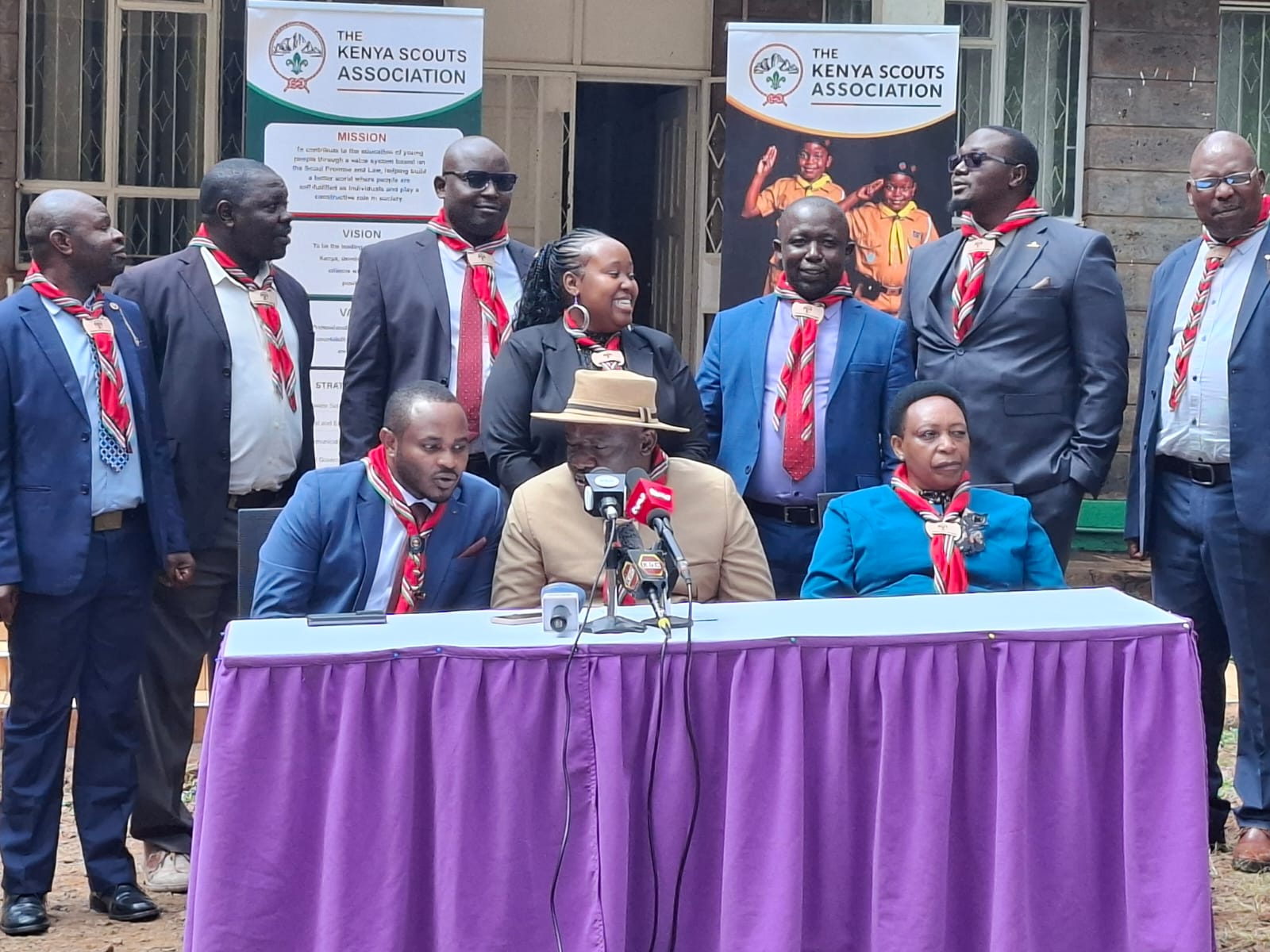
The Kenya Scouts Association is seeking greater transparency and accountability over a proposed Ksh2 billion Baden-Powell Scouting Centre of Excellence in Nyeri, raising questions over the project’s financing, ownership, governance and institutional mandate.
KSA says it supports investment in Scouting and the development of Nyeri as a global Scouting heritage destination, but wants key project certainties established before funds are committed, land acquired or construction begins.
Chief Commissioner Victor Radido says the Association’s concern is not about development, but about ensuring that any investment in Kenya’s Scouting movement is properly governed and anchored within the country’s legal and institutional framework.
“We are not opposed to development. We want training centres, campsites, leadership academies, technology and innovation, and greater investment in Kenya’s young people. But such development must be pursued lawfully, transparently and in partnership with the legitimate national institution responsible for Scouting in Kenya.”
KSA says the proposed project is reportedly being promoted by the World Scout Parliamentary Union Kenya Chapter in partnership with the County Government of Nyeri, with reported support from the Korea Scout Association and the Embassy of the Republic of Korea in Kenya.
The Association wants disclosure of who prepared the Ksh2 billion budget, the source and administration of the funds, ownership of the proposed land and completed facility, and the legal entity that will operate the centre.
Radido says these questions should be resolved before the project moves forward.
“Before any shilling is raised, any acre is acquired, or any foundation stone is laid, KSA is asking a basic question: who is the beneficiary?”
The dispute also extends to the role of the World Scout Parliamentary Union Kenya Chapter. KSA says WSPU Kenya has increasingly become involved in activities it considers part of KSA’s operational mandate, including youth programmes and Scouting-related training.
Radido has previously maintained that the disagreement is not with the global WSPU, but with what KSA considers an overreach by its Kenyan chapter. He said WSPU’s appropriate role should be to support Scouting through advocacy, legislation and fundraising, in cooperation with not in competition with the national Scouts association.
KSA has now formally denounced its existing Memorandum of Understanding with WSPU Kenya, saying the conduct complained of represents a departure from the spirit and purpose of the agreement.
It says it will pursue available institutional and legal measures to protect its statutory mandate and the integrity of Scouting in Kenya.
The Association is also seeking intervention from its Patron as it seeks to resolve the institutional dispute and establish clear lines of responsibility.
For KSA, the objective is not to stop investment in Scouting, but to ensure that such investment delivers lasting value to young people under transparent and accountable arrangements.
Radido says the issue ultimately goes beyond the proposed centre.
“Scouting belongs first and foremost to the young people who wear the uniform, serve their communities and live its values. They deserve transparency. They deserve accountability. And they deserve properly governed institutions.”
The Association says answering the outstanding questions would provide greater certainty for government, development partners, international Scouting organisations, donors and, most importantly, the young people expected to benefit from the project.
Reporting originally appeared via KBC Digital. Read the full source for additional context.