North American Trade Rift Deepens as Canada Declares "War" on US Tariffs
President Trump asserts Canada seeks US state benefits without obligations, while Ottawa vows dollar-for-dollar retaliation after talks collapse.
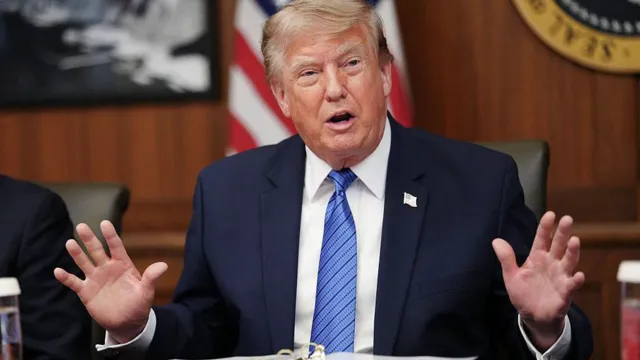
The fragile trade relationship between the United States and Canada has fractured, with Ottawa formally declaring a "trade war" following the collapse of high-stakes negotiations late last Friday. The breakdown swiftly triggered new 50% US tariffs on a range of Canadian imports, drawing a sharp rebuke from Canadian Prime Minister Mark Carney. For his part, US President Donald Trump characterized Canada as desiring "the benefits of being a State, without being one," while also claiming US farmers had long endured "massive amounts of Tariffs."
Prime Minister Carney lambasted the fresh US tariffs as a "miscalculation" designed to "hurt and divide us," confirming Canada would match the levies "dollar-for-dollar" starting September 8. This retaliation will target US steel, dairy, appliances, and electronics, among other goods. "You’re at war when you get attacked. We got attacked," Carney stated on Saturday, asserting that Canada was responding "reluctantly" to protect its national interests after the US "asked too much and they offered too little."
The new US tariffs, which are in addition to existing duties on Canadian steel, aluminium, automobiles, and lumber, will apply to specific Canadian products like wine, dairy, cement, clothing, and hockey equipment. Though limited in scope, covering approximately $20 billion (£15 billion; C$28 billion) of Canadian imports—around 5% of the total—the measures reflect President Trump's broader trade policy vision. Trump argues tariffs boost American manufacturing and create jobs, a stance that critics globally, including in African nations watching major trade blocs, contend has raised consumer prices and destabilized the global economy. US trade representative Jamieson Greer later confirmed no immediate plans to resume talks, despite the US having been prepared to reduce some tariffs as part of a deal.
Optimism for a deal earlier in the week dissolved as both sides accused the other of making last-minute changes. US negotiators claimed Canada introduced "new demands and walk backs" on previously agreed terms. Conversely, Prime Minister Carney dismissed assertions of last-minute Canadian requests, stating, "We clarified what was on offer and were continually disappointed by the answers." He further revealed that the US presented "unacceptable" and overly restrictive terms, notably seeking to curb Canada's sovereign ability to forge new trade agreements with other nations—a condition British Columbia Premier David Eby likened to reducing Canada to "the economic equivalent of the 51st state."
The collapse upends a deeply integrated trading relationship that underpins $1.6 trillion (£1.2 trillion) in annual trilateral trade across Canada, the US, and Mexico, raising concerns about the future of the North American free trade pact. Canadian leaders across the political spectrum voiced strong support for Prime Minister Carney's firm stance. Ontario Premier Doug Ford backed Carney, stating President Trump "can't be trusted," while Conservative opposition leader Pierre Poilievre deemed the US levies "unjustified." Quebec Premier Christine Fréchette warned of potential job losses and pledged support for affected sectors, though Alberta Premier Danielle Smith urged a resumption of negotiations.
This escalating dispute highlights the ongoing global tension between protectionist trade policies and established free trade agreements. While the immediate impact is concentrated in North America, such major trade conflicts can send ripple effects through international markets, affecting commodity prices and global economic stability—a situation closely monitored by economies worldwide, including those in East Africa. The long-term implications for the regional trade framework remain uncertain, with Carney acknowledging the collapse was "certainly not good news." (KBC Digital)