Machogu’s political gamble: The Perilous road back in the big, elusive hunt for Kisii Governor’s seat - Kahawatungu
This story has significance for readers across Kenya and beyond.
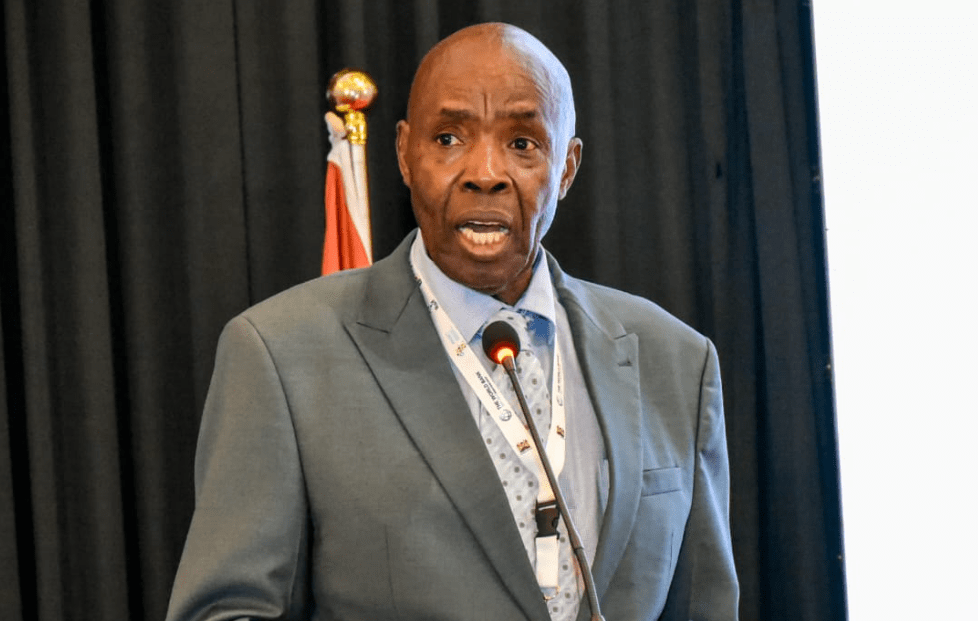
Former Education Cabinet Secretary Ezekiel Machogu has returned to a political battlefield he lost decisively in 2022, hoping a second attempt will deliver the victory that eluded him.
But the numbers confronting the former CS remain daunting.
During the 2022 gubernatorial election, Machogu garnered 82,104 votes against Governor Simba Arati’s 270,928 — a margin of nearly 189,000 votes.
Arati secured 68.54 per cent of the valid vote, while Machogu managed 20.77 per cent, leaving the former CS with a formidable political mountain to climb.
For Machogu, therefore, the 2027 contest is more than a rematch. It is an attempt to overturn a political hierarchy firmly established by the last election.
Machogu’s allies have argued that the 2022 contest was conducted on what they considered an uneven playing field.
Arati and his supporters, however, reject such suggestions, pointing to the election results as evidence of a clear voter mandate.
The ballot figures provide the most concrete measure of what happened: Arati won by a wide margin, while Machogu finished a distant second.
Now, as Machogu prepares for another attempt, the terrain appears no less difficult.
A recent Swiss Poll International survey puts Arati ahead at 61 per cent, with Machogu at 17.2 per cent.
Vocal Kisii Senator Richard Onyonka, should he run, would garner 13.4 per cent of the vote, according to the poll.
If the survey accurately reflects the political mood at the time it was conducted, Machogu remains more than 43 percentage points behind the incumbent.
That is a significant gap.
But polls are not elections. They measure public opinion at a particular moment and can change dramatically as campaigns intensify.
Kenyan politics has repeatedly demonstrated its capacity for late alliances, defections, shifting loyalties and unexpected realignments.
Machogu also retains certain political assets.
His years in national government gave him a high public profile and networks that could become important as the 2027 contest takes shape.
The challenge is converting that visibility into votes.
Arati, meanwhile, has the advantage of incumbency. He is already campaigning on projects, policies and his administration’s record while seeking another mandate.
That creates a different test for both men.
For Machogu, criticism of Arati will have to be accompanied by a persuasive alternative.
He must convince voters not only that the incumbent has fallen short, but that he can provide better leadership.
For Arati, the challenge is equally straightforward: defend his record and persuade voters that his administration deserves another term.
The political exchange between the two men is already sharpening.
Arati has sought to make Machogu’s age part of the political debate, arguing that the former CS should make way for a younger generation of leaders.
“At 75 years, you should be thinking about what legacy you will leave behind, not about returning to elective office,” he told Machogu recently during an explosive altercation.
The ODM Party deputy chair has also framed the issue as one of generational change.
“We need leaders who understand the challenges facing young people today. Leadership is about preparing the future, not holding on to the past,” he said.
Machogu, on his part, has rejected the age-based argument and sought to redirect the debate towards governance and performance.
“The people of Kisii are not looking for leaders to lecture them about age. They are looking at what has been delivered and what has not been delivered,” he said at a burial in Nyaribari.
The former CS has criticised Arati’s administration, portraying it as an example of what he considers inadequate county governance.
“Arati has had his opportunity. The question is simple: what has he done with it? The people will judge him by his record, not by political slogans,” Machogu said.
He has also challenged the governor to debate policy rather than age.
“If age is the governor’s strongest argument against me, then let him explain his record to the people of Kisii. I am ready to discuss development, accountability and the future of this county,” Machogu said.
Arati, for his part, has continued to defend the generational argument.
“Kisii cannot afford to go backwards. We must choose leaders who can carry the aspirations of the young generation and take this county forward,” he said.
The emerging contest therefore presents a clear political contrast.
Arati wants voters to consider Machogu’s age and the question of generational change.
Machogu wants voters to scrutinise Arati’s record in office.
But beneath the rhetoric lies a more consequential question: whether Machogu can close the enormous gap recorded in 2022 and reflected, at least for now, in recent polling.
The 2027 election could ultimately become a referendum on Arati’s performance in office.
For Machogu, however, it will also be a test of whether voters are willing to give him a second chance.
The early numbers suggest he has considerable ground to cover.
With the political battle already taking shape, the former CS has a difficult task ahead: persuade voters that the result of 2022 does not have to be the verdict of 2027.
Reporting originally appeared via Kahawa Tungu. Read the full source for additional context.